Dishes from the Renaissance
The Renaissance was a different era, with different art, architecture, music, and fashion. It also has different foods, some of which would be considered extremely exotic to us. Other dishes, were relatively normal, just more... Renaissance-y.
My Food's Fancier Than Your Food!
Just like wealthy people nowadays like to show off their more expensive cars and houses, people in the Renaissance tended to go all out with their food. Since the richer folks had chefs that were the equivalent of what would nowadays be working at a five-star resturant, the food was often extremely fancy. It was a way of "showing off."
For example, soups and stews often had the broths come in wondrous mixtures of colors. Many meals had strong amounts of pepper and ambrosia put on them to make them smell heavenly, and many meals were laced with herbs and greens. Everything was also extremely sugar-rich, and many time there was wine that was mixed in to add some extra flavor!
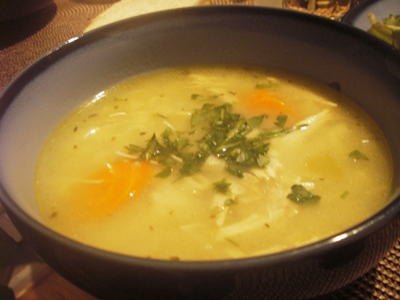
Don't believe me? Check out this one sweet soup recipe by the chef of a French king:
Soupe dorée
"Toast slices of bread, throw them into a jelly made of sugar, white wine, yolk of egg, and rosewater; when they are well soaked fry them, then throw them again into the rosewater and sprinkle them with sugar and saffron."
Now, does that sound good, or what?
Introducing Some New Food
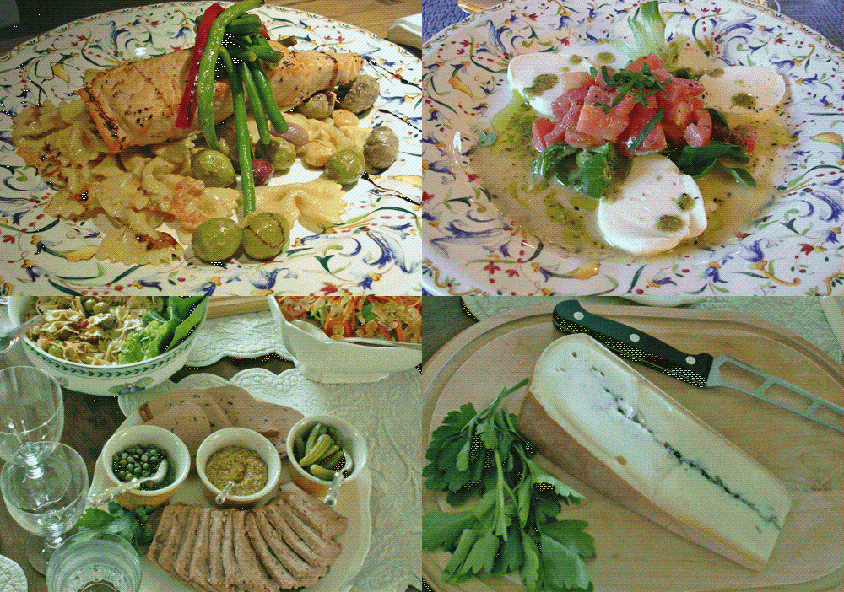
Now, we all know that when different cultures collide, all kinds of food become popular. For example, cocao beans weren't even important to anyone until explorers to the New World discovered that the natives were using the beans to make DELICIOUS chocolate, and a giant cocao craze was born! Here are some other foods that were either discovered or gained popularity during the Renaissance:
-Jamaican Pepper (also called "allspice")
-Green Beans
-Bananas (back then it was considered an extremely exotic fruit!)
-Kiwi Fruit
-Peanuts
-Cranberries
-Turkey
-Pinapples
-Broccoli
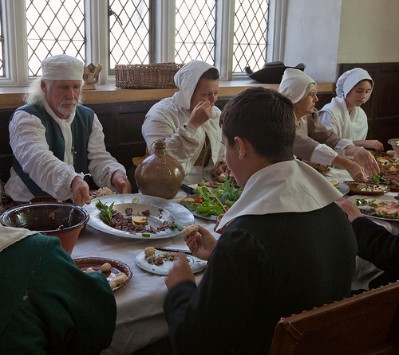
Table Manners
If you've heard "Get your elbows off the table!" being said to you before, then you might like to know that rules like those have been around since the Renaissance. In fact, the Renaissance was probably when "modern" table manners were invented! There are even table manner rulebooks dating back to Shakespeare's time that said specifically that you were NOT allowed to blow your nose on the tablecloth, put back on the table what has already been in your mouth, and a variety of other things.
And if you enjoy eating food with a fork, which you probably do, then you'd also find it interesting that during the Renaissance, all forks only had two tines to spear food with, instead of the normal four! And until the late 1600s, at the very end of the Renaissance, the tines of forks had curvy shapes to hold onto the food better.
As for knifes, normal kitchen knives didn't use to have rounded edges like these days. As the tale goes, in the 1630s, the very powerful Duc de Richelieu was holding a dinner at his house. But he was horrified when he saw the his guests were using the tips of his sharp knives to pick their teeth or clean the dirt from under thier fingernails. Angrily, he ordered all of his servants to round the edges of his knives. Eventually, it caught on, and knives with round edges were born.
Bread in the Renaissance
There were manny kinds of bread being made in the Middle Ages. Likewise, there were many different breads in the Renaissance. For a while, the type of bread you ate defined your social class.
The richest folks were busy chowing down on any kind of bread they wanted, mainly the delicate and soft wheat bread. Howevers, hungry royals were also partial to sugary and beautifully crafted pastries.
The middle class usually ate "darkbread," which consisted of a mixture of barley and a variety of inexpensive grains. The poorest folks had the simplest kind of bread, called "horse bread." It was mainly made up of beans, and was called "horse bread" because it was usually fed to the noble's horses!
Meat to Eat
The main course of many royal Renaissance feasts was the roast, sirloin beef being by far the most common. The rich folks usually had their meat dunked in juice or rose water, then sprinkled with sugar and assorted spices! Another delicacy was broiled and spiced sheep head.
Also, the Renaissance was when putting meat in salt to preserve it became common. Most middle-class Renaissance folks ate beef and sheep, although in times of war and financial crisises sometimes meat had to be replaced with cheese or thick broth. The poorest folks generally ate fish, which was the least expensive meat to eat. However, there are many accounts of hunters capturing and killing rabbits by the dozen and selling them at local markets.
Anyone Hungry?
So there you have it. The rich folks of the Renaissance dined like a hypothetical six-star resturant, and the poor folks were forced to eat like farm animals. There are a variety of cookbooks with exotic Renaissance dishes in them, and if you go to a Renaissance Fair you can count on finding some not-so-normal food.
There were some pretty weird dishes (putting wine in soup!), but then again, we're pretty guilty of making weird things too. The Renaissnace was just another era of culinary variety.