Music of the Renaissance
Music has been around for... well, forever. And with all the things changing and advancing during the Renaissance, you'd think music would advance quite a bit as well.
First off, Medieval music was quite dull. Even if there were numerous instruments and vocalists being played, they would always be playing the same tune at the same time, even if they were octaves apart. Go grab a guitar, or a piano (although pianos are pretty hard to carry around). Try playing a certain series of chords over and over again. Then imagine that you had a couple clones playing the exact same series of chords, but just in a higher octave. This was what, for some reason, a lot of earlier Medieval Renaissance was limited to. Music also used to be mainly played in church, but this finally changed during the Renaissance.
Renaissance music also appeared to be happier (perhaps praising the fact that Europe had been "born again?"). The sounds are loud and joyful, almost drunk-like, and good to dance to. Music was finally a paying job; musicians were paid huge amounts of cash at festivals and celebrations for their music. Musicians also tended to play in groups, with a variety of instruments, and voila! The orchestra was born.
Different Instruments
Sure, today we know our instruments. There's the piano. The guitar. The bass and the violin and the trumpet and trombone. There's even the legendary triangle, which only has one note: ting. Sure, in the Renaissance they didn't mind using instruments like trombones and tambourines. But a lot of Renaissance instruments were different than today's variety of instruments, sometimes even radically different. Many of them sounded like no instrument used today!
Bladderpipes
Bladderpipes, which eventually became what we today call bagpipes, were said to be invented by Scottich herdsman who figured that if you blew into a sheep's baldder, you would only need to squeeze the bottom of the bladder to hold the same tone in the note. It turns out they were actually on to something!
However, unlike the large, thick bagpipes we know of today, the old bladderpipes were thinner. When blowing through the more bulbous end, where the mouthpiece was, the bladder eminates a surprisingly loud sound from its bottom. Baldderpipes were the most common in the earlier years of the Renaissance, but of course were evntually modified into the modern bagpipe.

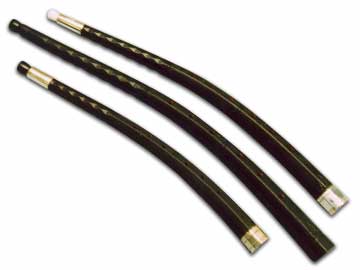
Cornett
The cornett, also known as the cornetto or zink, is one of the earliest European wind instruments. It should not be confused with another instrument called the cornet, which is actually a trumpet-like instrument.
Most cornetts were between one and one-half and two and one-half feet long, and could b straight or curvy. They could be made from a variety of different woods and therefore many types appeared far different than each other.
Cornetts were generally made so that they were low-pitched, and were usually played at churches. However, later cornetts were modeled after human singing voices, and it was said that from far away, the blaring of a cornett sounded just like the singing of a woman in soprano. However, cornetts were known to be extremely hard to play and were usually lost amidst the newborn interest in newer, easier instruments.
Hurdy Gurdy
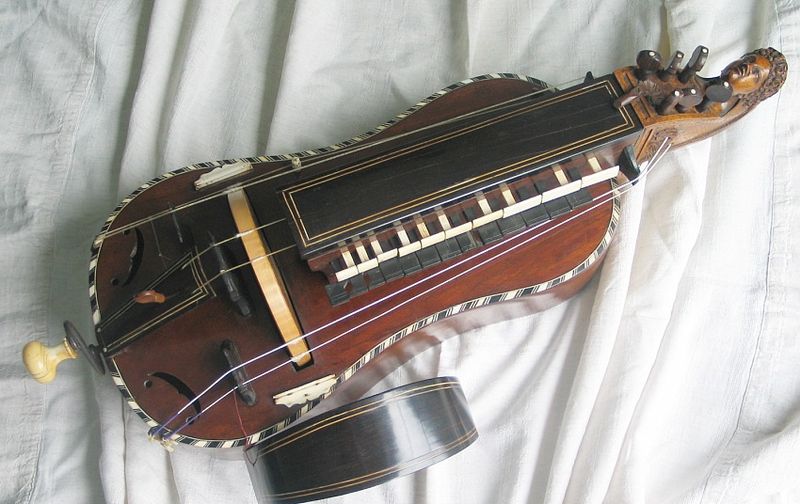
Sounds kind of funny, doesn't it? The hurdy gurdy, also known as the wheel fiddle, can indeed trace its origins back to fiddles, and was probably invented in the Middle East around the 1100s, and then finally gained popularity in western Europe during the Renaissance.
The hurdy gurdy was played by turning a lever on its side, called a tirant, like you were winding up a jack-in-the-box, then playing the notes on its bottom like you were playing the keyboard. The hurdy gurdy eminates a kind of sharp, electronic noise when played. Inside the hurdy gurdy, there is a lever the plays against buttons inside the base of the hurdy gurdy almost like a piano, so the hurdy gurdy is almost like a combination of many instruments.
Like many Renaissance instruments, people soon lost interest in the hurdy gurdy due to its difficulty to play and small variety of notes. It was replaced by instruments such as fiddles and trumpets.
Writing the Notes Down
You'd be surprised to know that during Medieval times, and well into the Renaissance, many musicians simply didn't write their notes down due to the fact that there was no universal way to write down musical notes. These days, we know that a quarter-note equals half a measure and so on, and we know the notes of A through G. Well, back then, musicians would just scrawl down the writing in their own words, making it so only they could read it and be able to play their music! Also, scores and barlines were never used.
This is why there are so few sheet musics remaining from back in the Renaissance era, and why most of those that do remain are cryptic and practically unreadable. It was until composers such as Bach from Germany, who played in the 1700s, did people actually start to write their music down for future generations to play.
Some Sample Music
If you really want to know what some Renaissance music sounds like, then click on the two music mp3s below! The mp3 on the left is a song called "Suite of the Dances" from the late Renaissance (usually called the "High Renaissance." The one on the right lets you know just what the funny little hurdy gurdy actually sounded like!
Music in the Renaissance - Suite of Dances.mp3
Hurdy-gurdy Day - Lancaster.mp3
Conclusion of Music
Eventually, the Renaissance faded away, as did its music. In fact, a vast majority of the instruments used in the Renaissance are practically unheard of. Why? Loss of interest. Difficulty in playing. Interest in different genres. But the Renaissance did join minds in the inventions of many different instruments that still defined the music we have today. Such as the cornetts, the first wind instruments. And what about the lovely bladder pipe, which without it we wouldn't have the legendary bagpipe today?
People like J.S. Bach would eventually begin playing the piano, and new types of music were created, such as classical. After that, other types of music came into popularity, such as swing, jazz, and rock and roll. And we wouldn't have any of that today if the Renaissance didn't present a mixture of separate cultures, cultures that brought together the different kinds of music of the Renaissance.

